
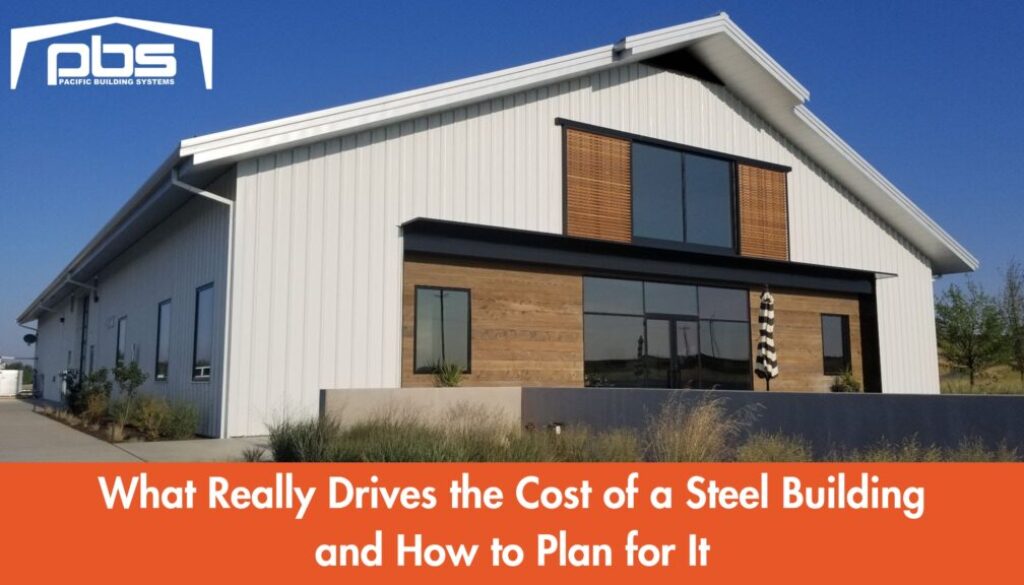
What Really Drives the Cost of a Steel Building and How to Plan for It
A Practical Guide to Budgeting Your Steel Building Project
Steel building systems are a wise investment for business and property owners, offering cost control, durability, design flexibility, low maintenance, and faster build timelines that deliver long-term value.
However, as with any other construction project, their overall cost-effectiveness and success depend heavily on careful planning and budgeting.
The good news is that investing in a steel building from a reputable manufacturer like Pacific Building Systems (PBS) already puts you ahead of the game. Because they are designed for quick, cost-efficient assembly, these pre-engineered building systems automatically eliminate some of the cost overruns commonly associated with traditional construction projects.
PBS steel building systems are delivered directly to your job site with everything needed for a smooth construction process.
Each piece is cut, welded, painted, and prepped to your specifications at our Oregon facility, then clearly labeled and packaged for easy installation. Frames come with clips and angles already in place; panels are pre-cut; and trim is custom-fit
However, despite these advantages, your project could still go off the rails without a realistic budget. More often than not, the difference between a successful build that stays on budget and one that comes with curveballs and excess costs comes down to having a clear understanding of the factors that affect the total cost and planning accordingly.
Establishing a reasonable spending plan from the very beginning will help you avoid unexpected setbacks and keep your project moving forward.
What influences the cost of a steel building and how do you navigate expenses?
In this post, we will break down some of the factors that determine the cost of a steel building project and offer practical guidance to help you plan, budget, and make informed decisions that support long-term performance without unnecessary financial stress.
1. Define the Project Scope
Every budget begins with a clear project scope. Without it, mid-project changes are more likely, which can drive up costs and slow progress before requesting quotes, taking time to define the building size, how the space will be used, and any special features, such as offices, mezzanines, crane systems, and more, and how the building may need to adapt in the future. At PBS, we encourage our customers to send us their project drawings and specs early on. This step helps us guide them and establish their goals early, ensuring the final design reflects their needs without excess.
2. Customization and Design Complexity
One of the advantages our customers value the most about their steel building is the ability to customize its design to fit their individual needs, helping them get more out of every square foot. However, there is a catch: the more complex your design, the higher the cost. Design features such as larger spans, unusual layouts, mezzanines, or multiple interior rooms can affect engineering, materials, and labor costs.
Structural and architectural components, along with finishes, can also influence the budget. Features like upgraded materials, glass storefronts, canopies, or decorative facades can add visual appeal and meet local design requirements, but each choice comes with added cost. We help our customers avoid unnecessary upgrades and expenses by offering practical design adjustments, such as alternate panel profiles or canopy styles, that can improve efficiency without sacrificing function.
3. Account for Permitting and Compliance
Permits and regulatory requirements account for a major share of the total cost of a steel building system. Permits come with plans, fees, and inspections, all of which take time and add to the price. Zoning rules determine how you can use your site, and building codes set the standards your project has to meet. If these details are missed early on, they can lead to delays, redesigns, and higher costs. One of the key advantages of purchasing a steel building system from PBS is the fact that we understand local zoning laws and other regulatory requirements, so our buildings are engineered to meet local, state, and national codes.
4. Site Preparation and Foundation
Another common pitfall that can lead to cost overruns is underestimating the impact that site conditions have on upfront costs. Before a steel building system is delivered, the site must be cleared, graded, and prepared for a proper foundation. Factors such as soil conditions, drainage, excavation depth, equipment needs, and foundation type will determine your construction timeline, long-term performance, and overall cost. These factors vary by location, so it is best to review them with a qualified contractor or engineer early. At PBS, we gather detailed site information up front to ensure your steel building is designed to work with your foundation and meet local code requirements from the start.
5. Labor and Installation
Labor costs are often dependent on the location of the build, the crew’s experience, and the complexity of the steel building system. Features such as long clear spans, multiple levels, added rooflines, or specialized structural elements require more time and expertise, which can increase installation costs.
Getting estimates from experienced steel building erectors and contractors early helps set realistic expectations. Crews familiar with steel building systems work more efficiently, follow local code requirements, and avoid mistakes that can lead to delays or added expense. A faster, well-managed installation also means you can put the building to use sooner.
6. Insulation and Energy Efficiency
Do not underestimate the impact proper insulation and energy efficiency will have on the long-term costs of your metal building. Quality insulation helps keep interior temperatures stable, reduces heating and cooling bills, and makes the space more comfortable to work in. At PBS, we can match insulation options like fiberglass, spray foam, or rigid insulation to your climate, how you plan to use the building, and your budget.
Add in reflective roof coatings, lighter roof panels, or an efficient HVAC system, and you can further reduce energy use, especially in large warehouses, storage buildings, or commercial spaces. While insulation and energy-efficient features can add to upfront costs, they usually pay for themselves over time.
7. Contingency Plans
Careful planning and preparation go a long way. Still, with any construction project, there are variables beyond your control, like weather delays, material price changes, and updated codes, which could impact your budget.
Including a contingency fund, typically 5 to 10 percent of the total project budget, provides a financial buffer that keeps the project moving forward without unnecessary stress or disruption. A contingency allows you to manage risk without compromising quality or timelines. It gives you flexibility to handle unexpected expenses, adjust to changing conditions, and make informed decisions if challenges arise during construction.
Building with a steel building system is an investment in long-term performance, flexibility, and value. When you know WHAT affects the cost, budgeting gets easier, and the result feels a lot more certain.
Applying these tips will help anyone in the market for a steel building system make informed decisions, avoid unwanted surprises, save money, and ensure their building supports their operation well into the future.
- Start with a clear plan
- Customize with intention
- Plan for permits and codes early
- Get a professional to evaluate the site
- Work with experienced installers
- Consider insulation & energy-efficient features
- Build in a financial cushion
Together, these steps help keep expenses in check and protect the long-term value of your investment.
Related Reading
A Beginner’s Guide to Managing Your Steel Building System From Design to Completion
8 Ways to Customize Your Steel Building
Understanding Metal Building Codes and Permits: What You Need to Know
Maximizing Space: Innovative Uses for Clear-Span Buildings
How to Spot Red Flags When Choosing a Steel Building Contractor
10 Mistakes to Avoid When Purchasing a Steel Building System
Ready to get started?
We have what it takes to make your next project a reality.
Contact a project consultant today.